As the world continues to evolve at a rapid pace, children and teens face new challenges that extend far beyond academics. Emotional intelligence, adaptability, critical thinking, and self-expression are becoming just as essential as traditional learning outcomes. In this context, art education plays a vital role in preparing young people for the demands of 2026 and beyond. At Art Center El Paso, creative learning is viewed not as an extracurricular luxury, but as a foundational pillar of healthy development and lifelong success.
Art gives young people the tools to process the world around them, communicate ideas clearly, and develop confidence in their own voices. As technology reshapes how we learn and interact, creativity remains one of the most valuable and irreplaceable human skills.
Art as a Foundation for Early Development
Creative learning begins in childhood, when imagination and curiosity are at their peak. Exposure to art for children supports emotional growth, motor skills, and cognitive flexibility during the most formative years of development.
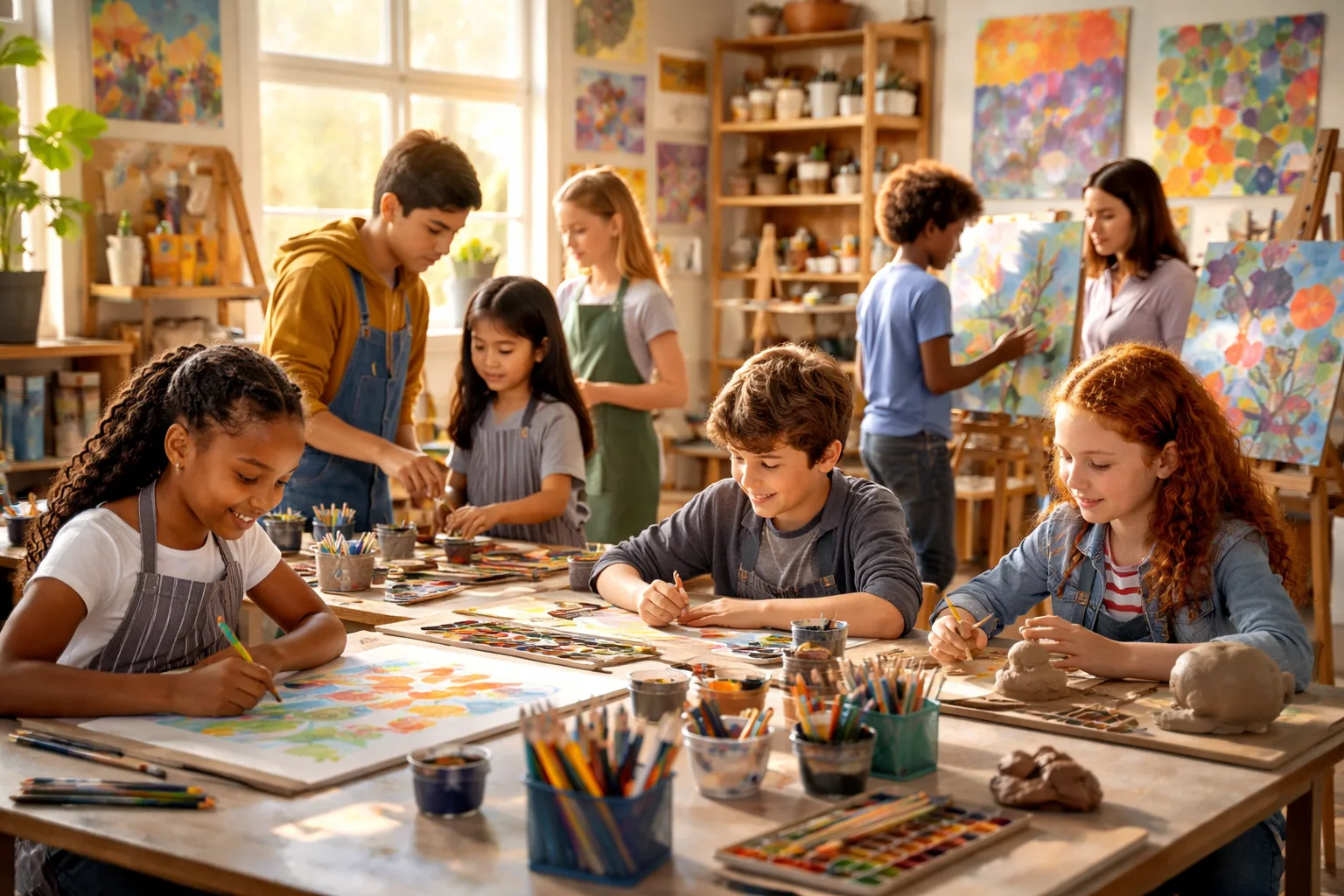
Through drawing, painting, sculpting, and hands-on exploration, children learn to make choices, solve visual problems, and express emotions in healthy ways. Art-based activities encourage kids to explore without fear of failure, reinforcing the idea that learning is a process rather than a test.
Early creative experiences help children:
-
Build confidence in their ideas
-
Strengthen focus and attention
-
Develop fine motor coordination
-
Learn patience and perseverance
-
Express feelings they cannot yet verbalize
These foundational skills shape how children approach learning across all subjects as they grow.
Understanding the Benefits of Art in a Changing World
The benefits of art extend far beyond creativity alone. In a rapidly changing educational landscape, art supports adaptability and innovation—skills increasingly valued in both higher education and future careers.
Art encourages young people to think critically, observe closely, and approach challenges from multiple perspectives. These abilities translate directly into improved academic performance, especially in reading comprehension, problem-solving, and abstract thinking.
In 2026, students must be prepared not only to absorb information, but also to interpret, analyze, and apply it creatively. Artistic learning strengthens these capacities by training the brain to connect ideas, recognize patterns, and imagine solutions.
Nurturing Creativity in Children for Lifelong Growth
Encouraging creativity in children is essential in a world where automation and artificial intelligence continue to expand. While machines can process data, creativity remains a uniquely human strength.
Creative environments allow children to experiment, take risks, and learn from mistakes without pressure. This freedom fosters innovation and resilience—qualities that help young learners adapt to uncertainty and change.
Children who engage in creative learning often demonstrate:
-
Higher emotional intelligence
-
Stronger communication skills
-
Greater curiosity and motivation
-
Increased confidence in decision-making
By nurturing imagination early, parents and educators help children develop the mindset needed to thrive in complex, evolving environments.

Why Teens Need Art More Than Ever
Adolescence is a critical stage for identity formation, emotional regulation, and self-discovery. Structured art programs for teens offer a safe, supportive outlet during a time often marked by stress, academic pressure, and social challenges.
Art allows teens to explore personal themes, social issues, and emotional experiences in constructive ways. Through visual storytelling and creative experimentation, they develop a stronger sense of self and learn to communicate their perspectives with clarity and purpose.
Teen-focused art programs help participants:
-
Manage stress and emotional overload
-
Build self-esteem and personal identity
-
Develop discipline and project completion skills
-
Connect with peers in meaningful, collaborative settings
-
Explore potential creative career paths
At Art Center El Paso, teen programs are designed to empower young people while respecting their individuality and creative voice.
The Link Between Creativity and Learning
The connection between creativity and learning is increasingly recognized by educators and researchers. Creative thinking enhances memory, comprehension, and engagement by making learning more interactive and meaningful.
When students approach learning creatively, they are more likely to:
-
Retain information long-term
-
Engage deeply with subject matter
-
Apply knowledge across disciplines
-
Develop independent thinking skills
Art integrates seamlessly with science, language, math, and social studies by encouraging observation, interpretation, and synthesis. This interdisciplinary approach reflects how learning happens in the real world, not in isolated categories.
How Art Center El Paso Supports the Next Generation
Art Center El Paso is committed to fostering creative growth across all age groups through inclusive, thoughtfully designed programs. By offering age-appropriate classes led by experienced instructors, the center ensures that children and teens receive guidance that supports both skill development and emotional wellbeing.
Programs focus on:
-
Hands-on exploration across multiple mediums
-
Encouraging self-expression without judgment
-
Building confidence through completed projects
-
Supporting collaboration and community connection
-
Creating a safe, welcoming learning environment
These experiences help young people see themselves as capable, creative individuals whose ideas matter.
Conclusion
In 2026, preparing children and teens for the future requires more than academic instruction alone. Creative learning nurtures emotional intelligence, adaptability, and confidence—qualities essential for personal fulfillment and long-term success. By supporting artistic exploration at every stage of development, families and educators empower young people to think independently, express themselves authentically, and engage with the world creatively. Art Center El Paso remains dedicated to guiding the next generation toward a future shaped by imagination, resilience, and meaningful connection.