Modern life moves fast. Between work, school, family responsibilities, and constant digital stimulation, it’s easy for emotional balance to slip out of reach. More people are discovering that creative practices offer something essential that traditional routines often lack: space to breathe, reflect, and reconnect. Research and lived experience increasingly highlight the powerful relationship between art and mental health, showing how structured creative learning can support emotional stability, clarity, and resilience.
At Art Center El Paso, art classes are designed not only to teach technique, but to create environments where people feel safe exploring their inner world. Whether participants arrive feeling overwhelmed, curious, or simply in need of calm, art becomes a pathway toward deeper emotional well-being.
Why Art Classes Support Emotional Balance
Art classes differ from casual creative activities because they provide structure, guidance, and consistency. This combination allows participants to step away from daily stressors and enter a focused, restorative space. Through guided instruction and intentional creative processes, students experience the benefits of creative therapy without pressure or judgment.
In these classes, individuals learn to slow down, observe, and engage with materials in a mindful way. The act of creating shifts attention away from intrusive thoughts and toward the present moment. Over time, this practice strengthens emotional regulation and fosters a sense of control that many people feel they’ve lost in stressful periods of life.
The Role of Creativity in Stress Reduction
Stress often accumulates when emotions have no outlet. Art offers a healthy release by transforming internal tension into visible form. Engaging in artistic processes provides meaningful stress relief, as the body and mind respond to repetitive movements, focused attention, and sensory engagement.
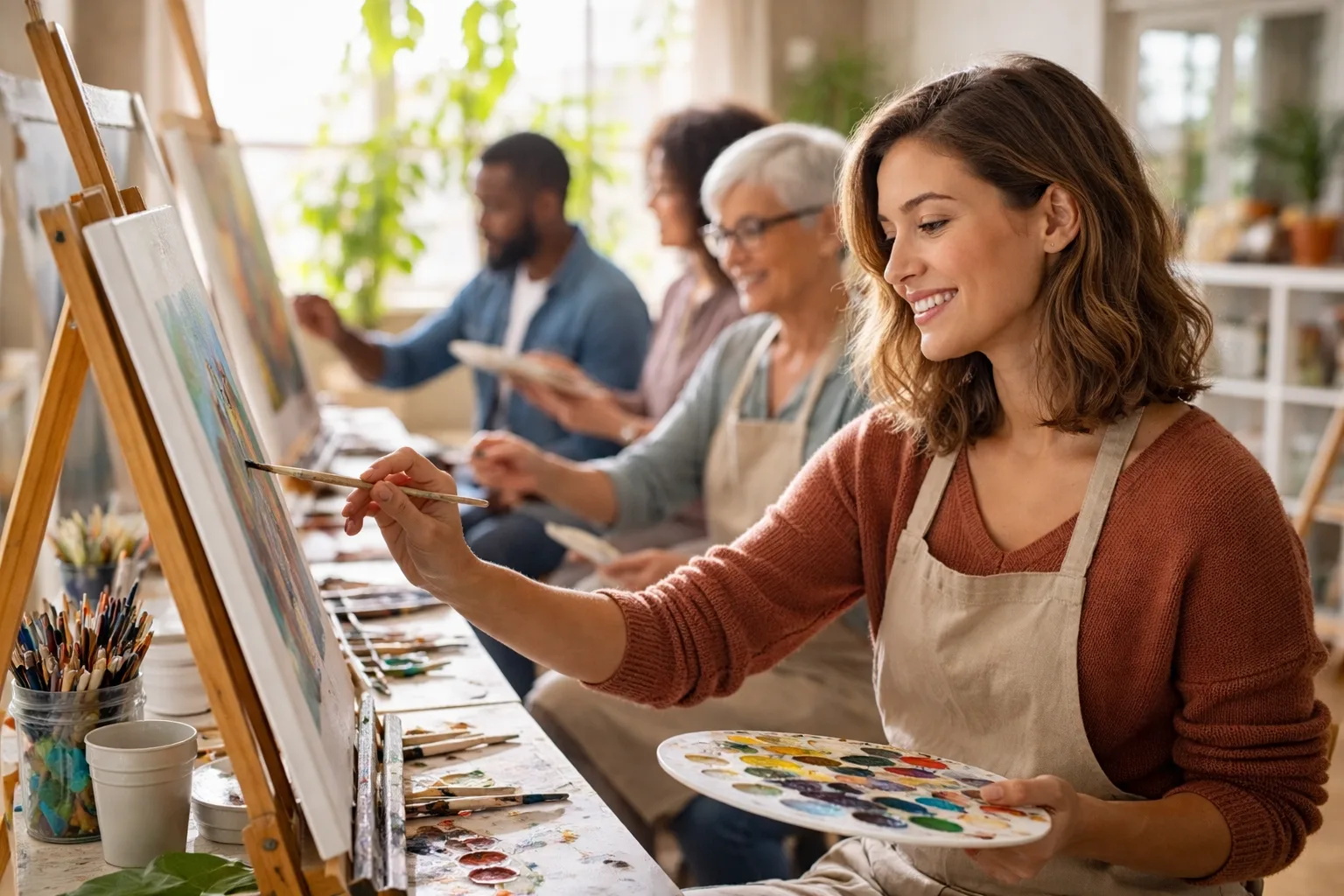
When participants paint, draw, or sculpt, the nervous system naturally begins to calm. Breathing slows, muscles relax, and mental noise softens. This response is similar to what occurs during meditation or deep relaxation techniques, making art classes an effective and enjoyable way to reduce emotional overload.
Art classes support stress reduction by:
-
Encouraging sustained focus away from daily worries
-
Providing a quiet, supportive environment
-
Offering physical engagement that releases tension
-
Promoting a sense of accomplishment and calm
Over time, regular creative practice can become a reliable tool for managing pressure and restoring balance.
Understanding Emotional Expression Through Art
Many people struggle to articulate their emotions verbally. Art provides an alternative language—one based on color, shape, movement, and texture. Through expression in art, individuals can explore complex feelings without needing to explain them.
In a class setting, students are encouraged to trust intuition rather than perfection. This freedom allows emotions to surface naturally, often revealing insights that words alone cannot capture. The creative process becomes a mirror, helping participants recognize emotional patterns and gain clarity about their internal experiences.
This form of expression supports:
-
Emotional awareness and self-understanding
-
Healthy release of suppressed feelings
-
Increased confidence in personal voice
-
Reduced emotional isolation
Art becomes not just an activity, but a meaningful form of emotional communication.

Art as a Tool for Mental Wellness Activities
Consistent participation in creative learning can play a significant role in long-term emotional care. Many people now include art classes as part of their mental wellness activities, alongside exercise, therapy, or mindfulness practices.
Unlike passive forms of relaxation, art actively engages the brain. It stimulates problem-solving, imagination, and sensory awareness while remaining gentle and accessible. This balance makes creative classes suitable for individuals of all ages and experience levels.
Art-based wellness activities can:
-
Improve mood and emotional resilience
-
Support focus and mental clarity
-
Reduce feelings of anxiety or overwhelm
-
Encourage healthy routines and self-care habits
At Art Center El Paso, classes are designed to feel welcoming and supportive, helping participants integrate creativity into their wellness journeys.
The Connection Between Art and Mindfulness
Mindfulness involves being fully present in the moment, without judgment. Artistic creation naturally supports this state of awareness, making art and mindfulness deeply connected practices. When individuals concentrate on brushstrokes, textures, or color choices, they are grounded in the here and now.
This focused attention reduces rumination and helps the mind disengage from stress-inducing thoughts. Over time, students learn to approach both art and life with greater patience and curiosity. Creative mindfulness fosters emotional steadiness and encourages a compassionate relationship with oneself.
Benefits of mindful art practice include:
-
Increased emotional regulation
-
Enhanced self-compassion
-
Greater awareness of thoughts and feelings
-
Improved ability to manage stress responses
Art classes offer a structured way to cultivate this mindful state regularly.
How Art Center El Paso Creates a Healing Environment
The environment in which art is created matters. Art Center El Paso prioritizes spaces that feel calm, inclusive, and inspiring. Instructors guide students with encouragement, ensuring that each person feels supported regardless of skill level.
Classes focus on:
-
Process over perfection
-
Exploration over outcome
-
Self-discovery over comparison
This philosophy allows participants to relax into the creative experience, making emotional healing a natural result rather than a forced goal. The sense of community within the classroom also reduces feelings of isolation, reminding students that they are not alone in their experiences.
Conclusion
Art classes offer more than technical skills—they provide meaningful pathways toward emotional balance, self-awareness, and inner calm. Through guided creativity, individuals discover new ways to process emotions, reduce stress, and reconnect with themselves. At Art Center El Paso, creative learning becomes a powerful form of self-care, supporting mental and emotional well-being in a world that often demands too much. By embracing art as part of a wellness routine, people open the door to healing, clarity, and lasting emotional resilience.