
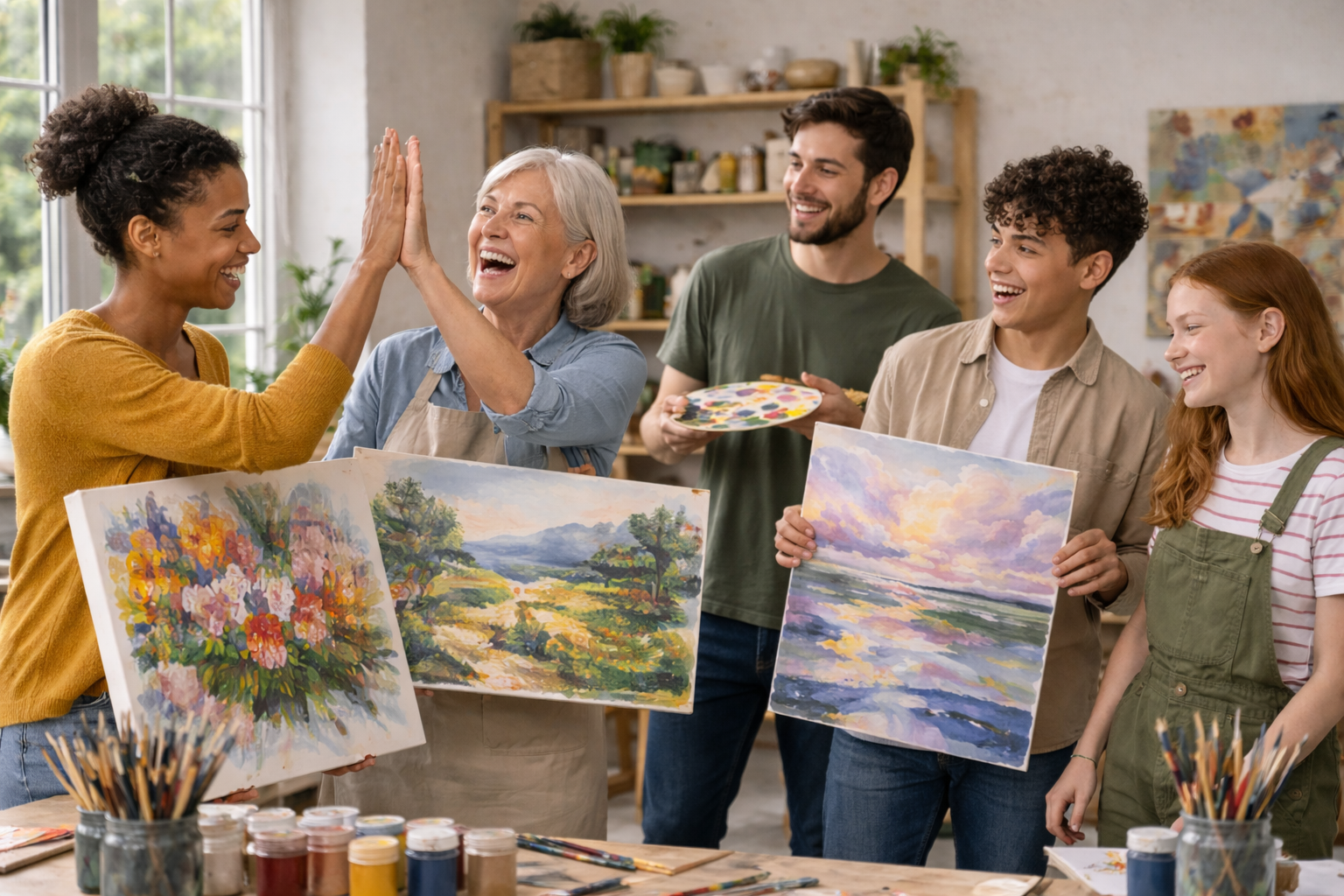
The rise of digital learning has made creative education more accessible than ever. Online tutorials, video platforms, and self-paced courses allow people to explore art from anywhere in the world. While these tools can be helpful, they often lack the depth, connection, and guidance that come from art instruction delivered face to face. For those seeking meaningful growth, confidence, and creative fulfillment, in-person art classes offer an experience that goes far beyond what a screen can provide.
At Art Center El Paso, learning art is not just about acquiring skills—it is about connection, immersion, and transformation through hands-on creative practice.
The Power of Human Connection in Art Education
Art is a deeply human activity. It thrives on interaction, dialogue, and shared experience. In-person art classes create environments where students learn not only from instructors, but also from one another. Conversations, observations, and spontaneous feedback enrich the learning process in ways that digital platforms cannot replicate.
Face-to-face learning allows students to:
-
Ask questions in real time
-
Observe techniques from multiple angles
-
Receive immediate clarification and encouragement
-
Feel supported by a creative community
This human connection fosters confidence and motivation, making the learning experience more engaging and rewarding.
Understanding the True Benefits of Art Classes
The benefits of art classes extend far beyond technical improvement. In-person learning supports emotional, cognitive, and social development by engaging the whole person in the creative process.
Art classes offer:
-
A structured yet flexible learning environment
-
Accountability through regular attendance
-
Encouragement to take creative risks
-
Opportunities for reflection and discussion
These elements help students stay committed to their artistic journey while building confidence and resilience.
Art Learning Through Hands-On Experience
Effective art learning happens through doing, not just watching. In a studio setting, students actively engage with materials, tools, and techniques under the guidance of an instructor who can adjust lessons to individual needs.
Hands-on learning allows students to:
-
Feel textures and understand materials directly
-
Practice techniques with immediate correction
-
Learn through trial, error, and adjustment
-
Develop muscle memory and fine motor skills
This tactile experience is essential for deep understanding and long-term skill development.
Art Classes vs. Online Courses: What’s the Difference?
When comparing art classes vs online courses, the difference lies in depth and engagement. Online tutorials often focus on quick results or isolated techniques, while in-person classes emphasize process, growth, and understanding.
Key distinctions include:
-
Personalized feedback versus generalized instruction
-
Structured progression versus self-guided learning
-
Community interaction versus solitary practice
-
Immersive environments versus screen-based engagement
While online courses can supplement learning, they rarely provide the comprehensive support needed for sustained artistic development.
The Creative Experience of Learning Together
Art is not created in isolation—it is shaped by environment, energy, and shared inspiration. A true creative experience emerges when individuals create alongside others, exchanging ideas and encouragement.
In-person classes cultivate creativity by:
-
Encouraging collaboration and dialogue
-
Exposing students to diverse perspectives
-
Creating moments of shared discovery
-
Building confidence through collective growth
This shared creative energy often inspires students to push beyond their comfort zones.
Why the Studio Environment Matters
There is something uniquely powerful about learning art in a studio. Dedicated creative spaces are designed to inspire focus, curiosity, and exploration. Stepping into a studio signals a shift in mindset—from daily routines to creative intention.
Studio environments provide:
-
Access to specialized tools and materials
-
Fewer distractions than home settings
-
A sense of purpose and creative immersion
-
Inspiration from artwork and ongoing projects
At Art Center El Paso, the studio becomes a space where creativity feels tangible and alive.
The Role of Instructors in In-Person Learning
Experienced instructors play a crucial role in guiding artistic growth. In-person teaching allows instructors to observe subtle details—such as posture, brush pressure, or material handling—that are often missed online.
Effective instructors:
-
Adapt lessons to individual learning styles
-
Offer immediate, constructive feedback
-
Encourage experimentation and curiosity
-
Help students overcome creative blocks
This personalized guidance accelerates learning and builds confidence in a way that prerecorded content cannot.
Accountability and Consistency in Creative Growth
One of the biggest challenges in self-guided online learning is maintaining consistency. In-person classes provide structure, routine, and accountability that help students stay engaged.
Consistent attendance supports:
-
Steady skill development
-
Long-term creative habits
-
Motivation through shared commitment
-
Clear progression and goal-setting
This structure is especially valuable for beginners and those returning to art after time away.
Emotional and Social Benefits of Studio Learning
Creating art alongside others fosters emotional connection and a sense of belonging. In-person classes offer social interaction that supports mental well-being and creative confidence.
Students benefit from:
-
Feeling part of a supportive community
-
Sharing experiences and challenges
-
Gaining encouragement during creative struggles
-
Celebrating progress together
These emotional benefits often become just as meaningful as the artistic skills gained.
Conclusion
While online tutorials offer convenience, in-person art classes provide depth, connection, and lasting impact. Through hands-on practice, personal guidance, and shared creative energy, students gain far more than technical skills—they develop confidence, community, and a deeper relationship with their creativity. At Art Center El Paso, learning art is an immersive experience that nurtures growth, inspiration, and meaningful artistic expression—something no screen can fully replace.