You can watch tutorials. You can buy supplies. You can practice alone at your kitchen table.
And that’s a beautiful place to start. But at some point, many artists hit the same wall.
They plateau. They repeat the same mistakes. They feel stuck. They don’t know what to improve next. That’s where real art instruction makes the difference. Because growth doesn’t just come from practice.
It comes from guided practice. At ART CENTER, we see it constantly. The shift that happens when someone moves from experimenting alone to learning with structure is dramatic. Let’s talk about why.
Practice Is Good. Feedback Is Better.
When you work alone, you rely on your own eye. But what if your eye hasn’t been trained yet?
An experienced instructor sees things you can’t see:
-
Proportion inconsistencies
-
Weak focal points
-
Overworked areas
-
Missed value contrast
-
Composition imbalance
Instead of guessing what went wrong, you get clarity. Instead of repeating errors, you correct them early. This is one of the biggest benefits of art classes — accelerated awareness. And awareness speeds improvement.
The Power of Environment
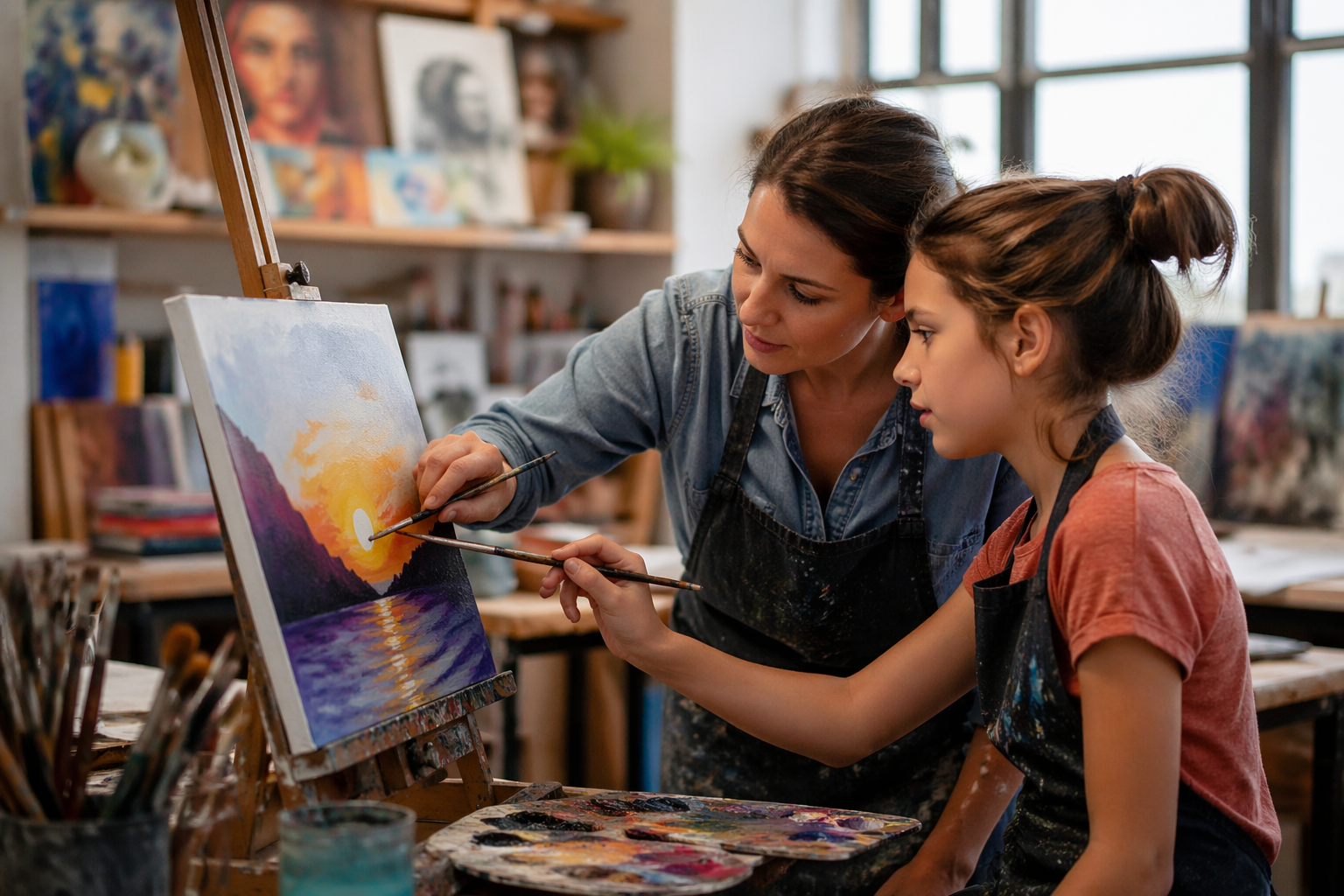
There’s something different about walking into a dedicated creative space. Easels set up.
Materials organized. Artwork on the walls. Other artists working around you. The energy shifts.When you commit to learning art in a studio, you’re stepping into an environment designed for focus and growth. Distractions drop. Intentionality rises. Creativity feels structured instead of chaotic. At home, it’s easy to pause. In a studio, you stay engaged. And consistency builds skill.
Accountability Creates Momentum
It’s easy to skip practice when no one is expecting you. It’s harder to skip when a class is waiting. Structured in-person art classes create rhythm:
-
Weekly sessions
-
Ongoing projects
-
Skill progression
-
Milestones
That rhythm builds momentum. Momentum builds confidence. Confidence builds consistency. And consistency is what transforms beginners into developing artists.
Why Structure Accelerates Learning
Art may look free-flowing. But strong art is built on structure. Foundational skills matter:
-
Perspective
-
Proportion
-
Color theory
-
Value control
-
Composition principles
-
Material handling
When you rely only on online tutorials, learning can become fragmented.
You pick up random tips. You jump between styles. You skip fundamentals.
Comparing art classes vs online courses often reveals one major difference: cohesion.
A structured program builds skills intentionally. One lesson supports the next. One technique reinforces another. Progress feels connected. That connection makes growth sustainable.
You Learn More Than Technique
Real growth isn’t just technical. It’s experiential. A true creative experience involves:
-
Problem-solving
-
Experimentation
-
Discussion
-
Reflection
-
Revision
-
Breakthrough moments
In a live class setting, you don’t just receive information. You interact with it. You ask questions in real time. You adjust immediately. You observe how others solve similar challenges. That layered learning deepens retention.
Community Strengthens Confidence
Art can feel vulnerable. You’re putting your ideas on display. You’re exposing effort. You’re revealing progress. Doing that alone feels intimidating. Doing it in a supportive environment changes everything.
One overlooked aspect of structured art learning is the community factor. When artists grow together, they:
-
Share insights
-
Normalize mistakes
-
Celebrate improvement
-
Offer perspective
-
Encourage persistence
Confidence grows faster when you realize you’re not the only one figuring things out.
Immediate Corrections Prevent Long-Term Habits
One of the biggest risks of self-teaching is reinforcing incorrect habits. If you consistently hold a brush improperly… If you avoid shading challenges… If you misjudge proportion repeatedly…
Those patterns become harder to fix later. With professional guidance, corrections happen early. You adjust before habits solidify. This is one of the practical benefits of art classes that many beginners don’t anticipate — long-term efficiency. Early precision saves years of frustration.
Energy Matters More Than You Think
Watching a video is passive. Being physically present is active. In structured in-person art classes, you engage differently: You listen differently. You observe differently. You create differently. There’s a psychological shift when you show up in person. Commitment increases. Focus sharpens. Creative stamina improves. And that energy compounds over time.
Learning Alone Isn’t Wrong — It’s Limited
Online tutorials have value. They’re accessible. They’re convenient. They’re flexible.
But comparing art classes vs online courses often highlights something subtle: depth. Videos can demonstrate. They can’t personalize. They can’t adjust to your pace. They can’t answer spontaneous questions. They can’t observe your technique live.
Personalized feedback accelerates understanding in ways pre-recorded content simply can’t.
That’s where structured art instruction becomes transformational rather than informational.
Skill Development Feels Different When It’s Intentional
When growth is intentional, it becomes measurable.
You can see improvement in:
-
Line control
-
Color confidence
-
Composition balance
-
Visual storytelling
-
Concept clarity
And when improvement becomes visible, motivation strengthens. At ART CENTER, students often look at their early work and are surprised. Not because it was bad. But because progress happened faster than expected. That’s the power of structured guidance.
Strategic Advantages of Learning in a Studio Setting
Committing to guided learning supports:
-
Faster technical improvement
-
Stronger artistic discipline
-
Greater creative clarity
-
Higher retention of concepts
-
Increased confidence in critique
-
More consistent practice habits
-
Better preparation for advanced projects
-
Long-term artistic sustainability
Structure doesn’t restrict creativity. It strengthens it.
Growth Requires More Than Talent
Talent is helpful. Dedication matters more. And guidance accelerates both. When you combine consistent effort with professional direction, progress becomes tangible. The path feels clearer. The obstacles feel manageable. The results feel earned.
At ART CENTER, growth isn’t accidental. It’s supported. And that support changes outcomes.
Conclusion
Artistic progress doesn’t have to feel confusing or slow. With the right environment, thoughtful mentorship, and consistent structure, improvement becomes steady and visible. Guided learning builds more than skill — it builds confidence, clarity, and creative momentum. If you’re ready to move beyond trial and error and into purposeful growth, stepping into a dedicated studio space may be the turning point. Sometimes the difference between staying stuck and moving forward isn’t more effort. It's a better direction.