Art is often associated with creativity and emotional expression, but its impact goes far beyond imagination. Across all stages of life, art plays a powerful role in shaping how the brain processes information, solves problems, and adapts to new challenges. One of the most profound outcomes of structured art education is the development of critical thinking in art, which strengthens cognitive abilities while encouraging curiosity, reflection, and independent thought.
At Art Center El Paso, art classes are designed not only to inspire creativity, but also to support mental growth, helping learners of all ages build strong cognitive foundations through hands-on experiences.
Understanding the Cognitive Power of Art
Art engages multiple areas of the brain at once. When individuals draw, paint, sculpt, or design, they are making decisions, analyzing visual information, and translating abstract ideas into concrete forms. This process stimulates the cognitive benefits of art, which include improved memory, attention, and reasoning skills.
Art-based activities require learners to:
-
Observe details and patterns
-
Make intentional choices
-
Reflect on outcomes and adjust strategies
-
Integrate sensory and conceptual information
These mental processes strengthen neural connections and enhance overall cognitive flexibility.
How Art Shapes Brain Development Across Ages
From early childhood to adulthood, the brain continues to evolve. Creative activities support brain development through art by encouraging active engagement rather than passive consumption of information. Art invites the brain to explore, experiment, and adapt.
At different life stages, art supports brain development by:
-
Enhancing fine motor skills in young children
-
Strengthening focus and planning in teens
-
Supporting mental agility and memory in adults
-
Encouraging lifelong neuroplasticity
Art classes offer structured challenges that keep the brain active, responsive, and engaged at every age.
Building Creative Learning Skills Through Art
Art education nurtures creative learning skills that extend well beyond the studio. These skills help learners approach information with curiosity, confidence, and adaptability—qualities essential for success in both academic and real-world settings.
Creative learning skills developed through art include:
-
Visual analysis and interpretation
-
Experimentation and risk-taking
-
Reflection and self-assessment
-
The ability to connect ideas across disciplines
By engaging creatively, learners become more active participants in their own cognitive growth.
Art as a Tool for Cognitive Growth
Art is not just expressive—it is deeply analytical. Through art for cognitive growth, students learn to plan projects, anticipate challenges, and evaluate results. Each artwork becomes a mental exercise that strengthens reasoning and problem-solving abilities.
Art supports cognitive growth by:
-
Encouraging goal-setting and planning
-
Teaching cause-and-effect relationships
-
Developing spatial and visual reasoning
-
Strengthening the ability to revise and improve work
These skills are transferable to many areas of life, from academics to professional environments.
Learning Through Creativity: A Natural Process
Traditional learning often prioritizes memorization, but creativity encourages deeper understanding. Learning through creativity allows individuals to internalize knowledge by actively engaging with concepts rather than passively receiving information.
Creative learning environments:
-
Promote curiosity and intrinsic motivation
-
Encourage exploration without fear of failure
-
Support deeper comprehension through hands-on practice
-
Foster long-term retention of information
Art classes create opportunities for learners to discover knowledge organically, making learning more meaningful and memorable.
Art-Based Learning in Educational and Community Settings
The principles of art-based learning are increasingly recognized in educational and community programs because of their effectiveness in supporting cognitive development. By integrating art into structured learning environments, students engage multiple senses and learning styles simultaneously.
Art-based learning encourages:
-
Multisensory engagement
-
Collaboration and communication
-
Flexible thinking and adaptability
-
Reflection and critical analysis
At Art Center El Paso, art-based learning is embedded into class design, ensuring that creativity and cognition grow together.
Cognitive Benefits for Children and Teens
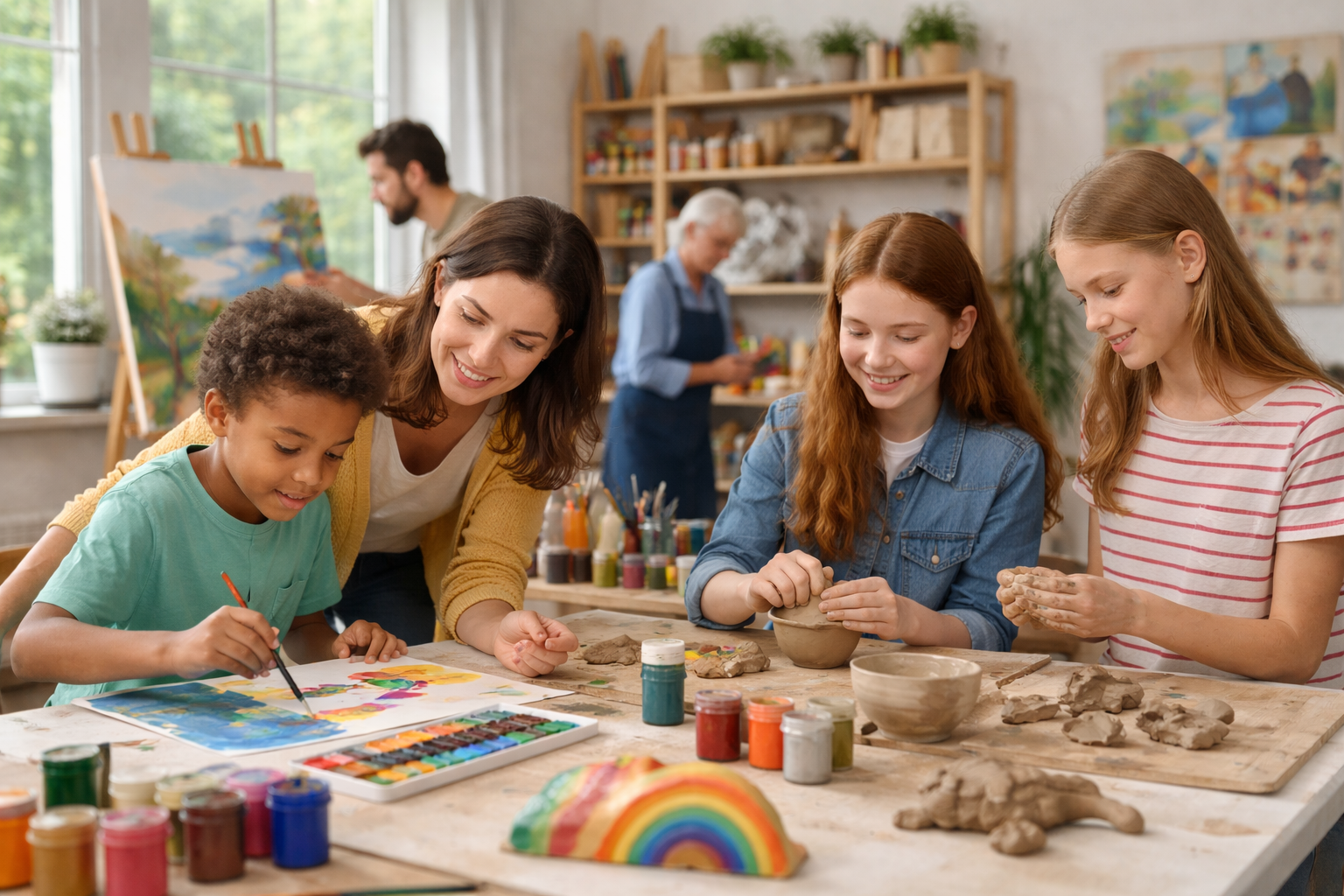
For younger learners, art classes provide essential mental stimulation during critical developmental stages. Children and teens benefit cognitively when art is part of their education because it supports both academic and emotional growth.
Art classes help young learners:
-
Develop focus and sustained attention
-
Strengthen memory and information processing
-
Build confidence in decision-making
-
Enhance problem-solving abilities
These benefits contribute to stronger learning outcomes across subjects.
Cognitive Enrichment for Adults and Lifelong Learners
Cognitive development does not stop in adulthood. Engaging in art later in life supports mental agility, creativity, and emotional balance. Adult learners benefit from art classes that challenge the brain while offering opportunities for self-expression and reflection.
For adults, art supports:
-
Mental flexibility and adaptability
-
Stress reduction through focused engagement
-
Improved memory and concentration
-
Continued intellectual curiosity
Art classes provide a meaningful way to keep the mind active and engaged throughout life.
The Role of Art Centers in Cognitive Development
Community art centers play a vital role in making cognitive enrichment accessible. By offering structured, supportive environments, art centers create opportunities for individuals to develop mentally through creative practice.
At Art Center El Paso, classes are designed to:
-
Encourage exploration and independent thinking
-
Support learners at every skill level
-
Provide guidance without limiting creativity
-
Foster a growth-oriented learning environment
This approach ensures that cognitive development remains central to the creative experience.
Art classes are powerful tools for cognitive development, supporting how individuals think, learn, and adapt throughout life. By engaging the brain through creativity, reflection, and problem-solving, art fosters mental growth that extends far beyond the studio. At Art Center El Paso, art education is designed to nurture curiosity, strengthen thinking skills, and support lifelong cognitive vitality—helping learners of all ages grow intellectually while discovering the joy of creative expression.