Not everyone walks into a room ready to speak. Some people observe first. They listen. They hesitate. They have ideas. But they don’t always share them. Confidence doesn’t always show up loudly. Sometimes, it needs space to grow.
At ART CENTER, we’ve seen something powerful happen again and again. People who describe themselves as shy. Reserved. Unsure.
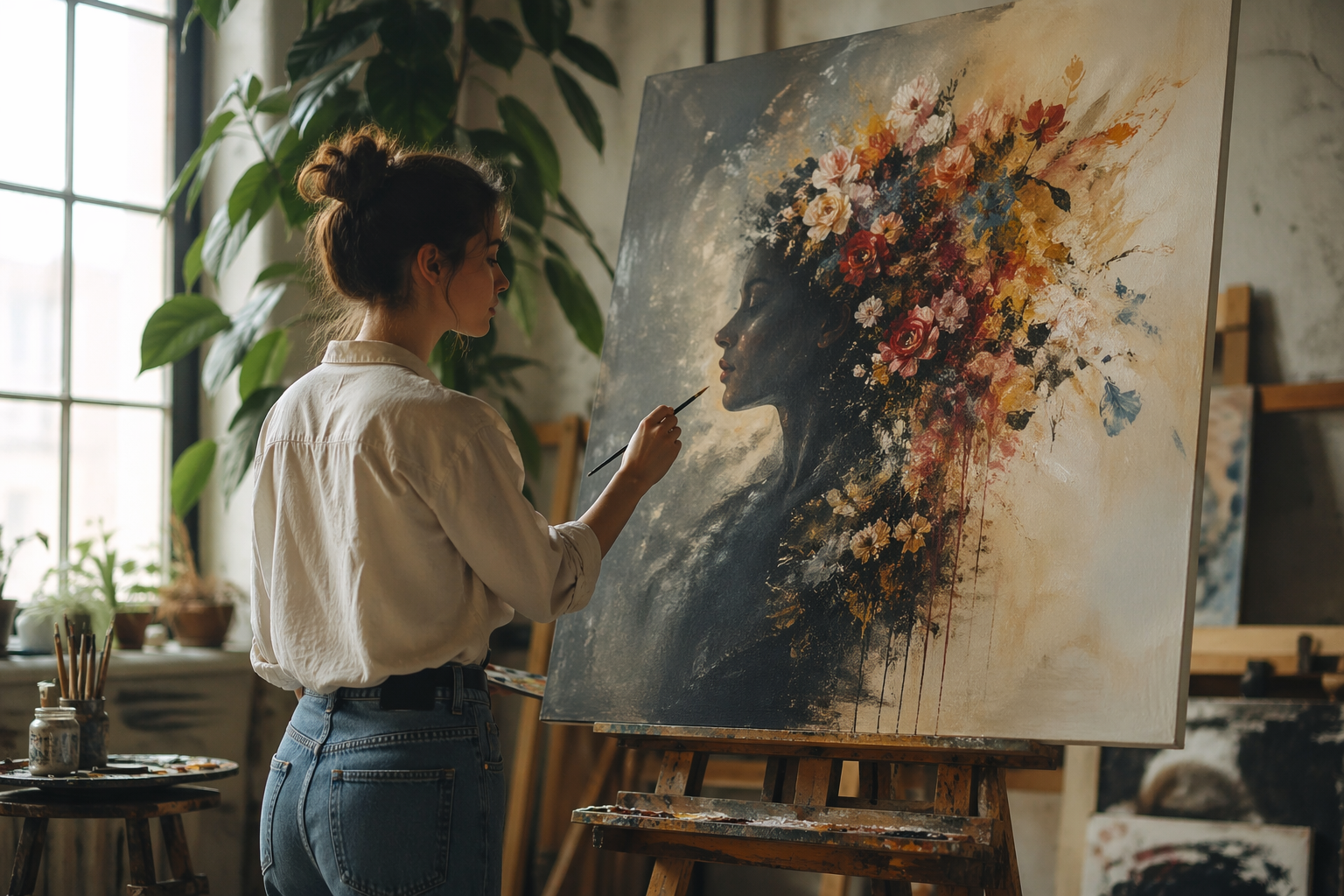
They start creating. And little by little, their creative confidence begins to expand. Not because someone forced them to perform. But because art gave them a voice. Let’s talk about how that transformation happens.
Art Speaks Before You Do
For many people, expressing thoughts verbally can feel intimidating. But putting those same thoughts into color, line, texture, or form?
That feels safer. Art creates a buffer. You’re not saying, “This is who I am.” You’re saying, “This is what I made.” That subtle shift makes participation easier.
In structured group art classes, students don’t need to compete for attention. They share space. They share process. They share progress. And over time, that shared creative environment reduces social pressure.
Confidence Grows Through Action
Confidence isn’t something you wait for.
It’s something you build.
Each completed piece strengthens internal trust.
Each finished project reinforces ability.
Each small risk — trying a new technique, using a bold color, sharing your work — adds momentum.
Through consistent learning art, students begin to recognize their own growth. They stop focusing on comparison. They start focusing on improvement. And improvement fuels belief.
Collaboration Without Competition
Not all group environments feel safe. Some feel competitive. Some feel intimidating.
But well-designed collaborative art projects work differently.
In these settings:
-
Ideas build on each other
-
Skills complement one another
-
Progress is shared
-
Success is collective
When students contribute to a shared piece, they realize their input matters. That realization builds personal assurance. Because contribution leads to value. And value leads to confidence.
Art Creates Low-Pressure Social Interaction
For people who feel uncomfortable in purely social gatherings, art offers structure. Instead of small talk, there’s a task. Instead of awkward silence, there’s focus. Instead of performance, there’s participation. The art class social benefits often surprise students the most. Conversations happen naturally:
“What brush did you use?”
“How did you blend that?”
“Why did you choose that color?”
The dialogue is centered on creation. Which makes it easier. More authentic. Less forced. And that ease strengthens social comfort over time.
Shared Creativity Builds Trust
Working alongside others in group art classes builds subtle but powerful bonds. You witness progress. You observe effort. You see vulnerability in unfinished work.
That shared vulnerability creates trust. And trust reduces fear of judgment. When fear decreases, expression increases. That’s when true creative teamwork begins to form. Not because people are assigned roles. But because they feel safe contributing.
Safe Spaces Encourage Risk-Taking
Confidence grows when people take risks — and survive them. Trying a new medium. Speaking during critique. Presenting an idea. Offering feedback.
In supportive art experiences, risk feels manageable.
Constructive critique replaces harsh criticism.
Encouragement replaces comparison.
Guidance replaces dismissal.
When someone realizes they can try something new without embarrassment, they expand their comfort zone.
And expansion strengthens self-belief.
Progress Becomes Visible
There’s something uniquely powerful about visible growth.
You can see improvement in your own work.
Lines become steadier.
Color choices become intentional.
Compositions feel balanced.
As skills improve, internal dialogue shifts.
From:
“I’m not good at this.”
To:
“I’m getting better.”
That shift is the foundation of creative confidence.
And it rarely happens in isolation.
It happens through consistent practice, feedback, and supportive structure.
Speaking About Your Work Strengthens Your Voice
At ART CENTER, students are encouraged to talk about their pieces.
Not in a performative way. But in a reflective way.
Why did you choose that theme? What challenge did you face? What would you change next time?
Explaining artistic choices strengthens clarity. Clarity strengthens articulation. Art becomes a bridge between internal ideas and external communication. For reserved individuals, this is transformative. Because they learn to trust their own perspective.
The Ripple Effect Beyond the Studio
Confidence developed in creative settings doesn’t stay in the studio.
It shows up elsewhere.
Students often report:
-
Speaking up more at work
-
Sharing ideas more freely
-
Feeling less anxious in group settings
-
Taking initiative in collaborative tasks
-
Expressing opinions with greater ease
That’s because confidence built through art is experiential. It’s not theoretical. It’s practiced. Through consistent learning art, individuals strengthen both skill and self-assurance.
Why Environment Matters
Not all environments nurture growth.
A supportive studio prioritizes:
-
Encouragement
-
Respectful critique
-
Clear instruction
-
Collaborative opportunity
-
Balanced independence
In thoughtfully structured art experiences, participants feel seen — not judged. And when people feel seen, they’re more willing to contribute. Contribution builds confidence. Confidence builds voice.
Strategic Benefits of Creative Group Learning
Participating in structured art programs supports:
-
Increased self-expression
-
Stronger communication skills
-
Greater emotional resilience
-
Improved social comfort
-
Enhanced collaborative ability
-
Healthy risk-taking
-
Positive peer interaction
-
Long-term self-trust
These outcomes extend far beyond technique. They strengthen identity.
You Don’t Have to Be Outgoing to Be Confident
Confidence isn’t loud. It isn’t dramatic. It isn’t constant. It’s steady. It’s internal. It’s knowing you can try, adjust, and try again. At ART CENTER, we don’t just teach technique. We create space. Space for growth. Space for connection. Space for courage.
And when people allow themselves to create without fear, something shifts. They stand a little taller. They speak a little clearer. They trust themselves a little more.
Conclusion
Confidence doesn’t appear overnight. It grows through action, support, and repeated experience.
Art provides a uniquely safe and powerful environment for that growth. Through shared projects, guided instruction, and meaningful interaction, individuals discover that their ideas have value — and that their voice deserves space.
The transformation may begin quietly. But over time, it becomes undeniable. Sometimes the most powerful way to find your voice isn’t by speaking louder. It’s by creating boldly.